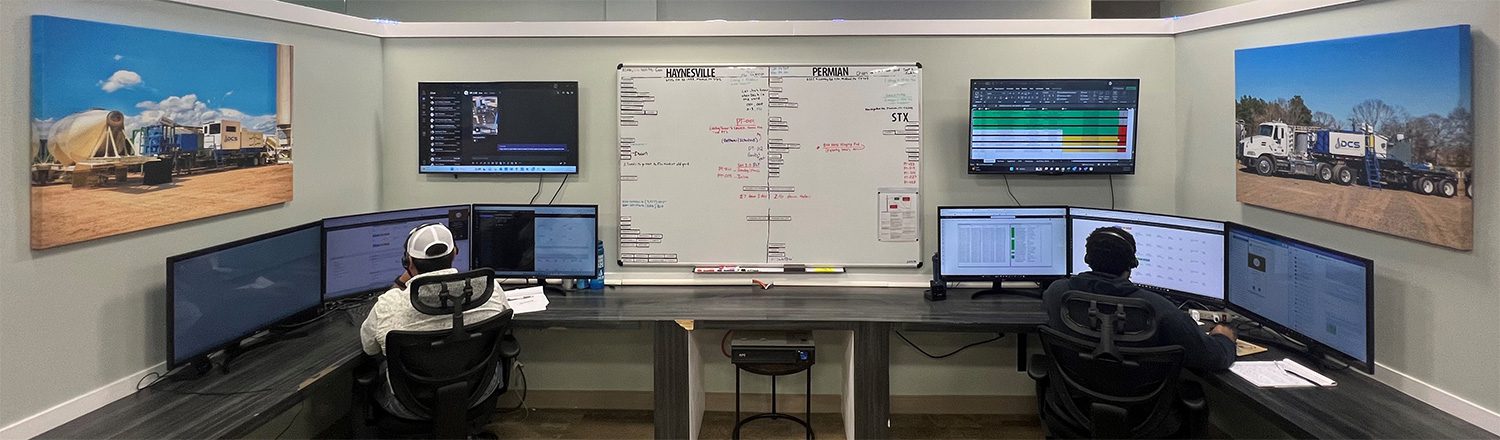
24/7 expert monitoring and control of every active DriFlow unit in the field. The ROC is the operational backbone that keeps DCS running at +99% pumping efficiency — stage after stage, job after job.
The DCS Remote Operations Center provides complete remote access and control over every DriFlow unit through virtual control screens. Our team of expert technicians monitors process conditions, identifies anomalies, and intervenes before they become NPT events.
DCS utilizes the latest in cloud-based IoT technology to monitor all ongoing jobs in real time — and control field assets when required. This cutting-edge use of technology allows us to achieve superior run-time efficiency compared to our peer group.
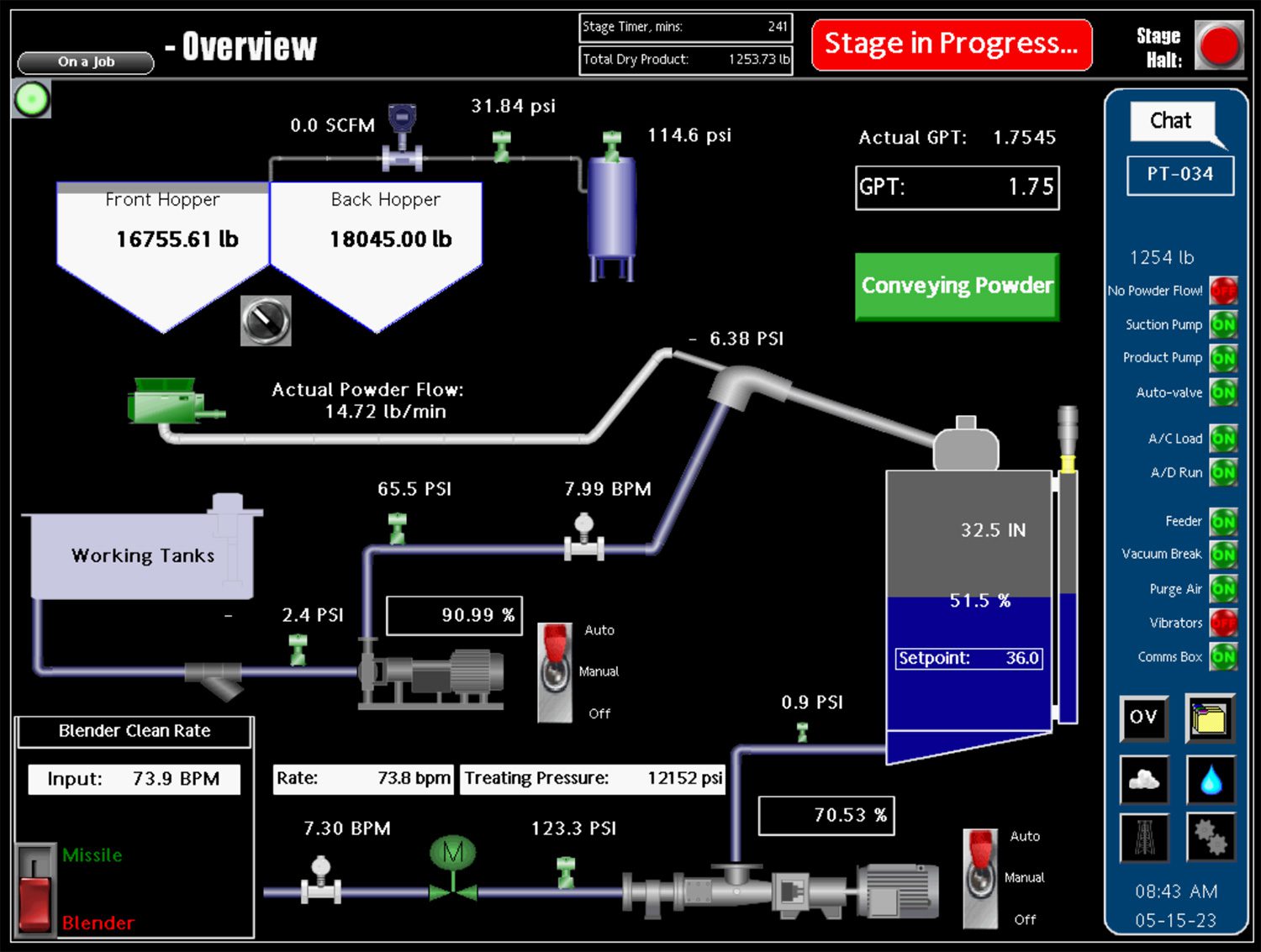
Virtual DriFlow HMI gives ROC technicians full visibility and control over every unit — same view as the on-site operator, from anywhere.
The ROC team continuously monitors unit telemetry to identify performance trends and anomalies before they cause downtime events.
A dedicated team of DriFlow experts — not just monitoring dashboards, but actively supporting field operators through complex issues in real time.
Stage-level performance data captured and stored for every job — available through DCS360 for client reporting, cost analysis, and continuous improvement.
When a field issue requires boots on the ground, the ROC coordinates and dispatches the right DCS personnel to resolve it fast.
The ROC has a core mandate: no job can ever run out of product, no matter what (with the exception of safety concerns). PT tank levels are tracked job-to-job to stay ahead of every delivery need.
Supporting the ROC's core inventory mandate, the team has a full internal logistics team to carry out their mission — ensuring loaded PTs reach location before they're ever needed.
The DriFlow fleet is managed 24/7 by a team of expert individuals. By utilizing analytical tools to identify process trends and performance anomalies, the ROC team gains operational foresight to minimize NPT events and continually exceed industry benchmarks.
When an issue is identified — a feeder anomaly, a comms interruption, a pressure excursion — the ROC team responds before the field operator even notices. That proactive posture is why DCS pumping efficiency consistently outperforms the peer group.